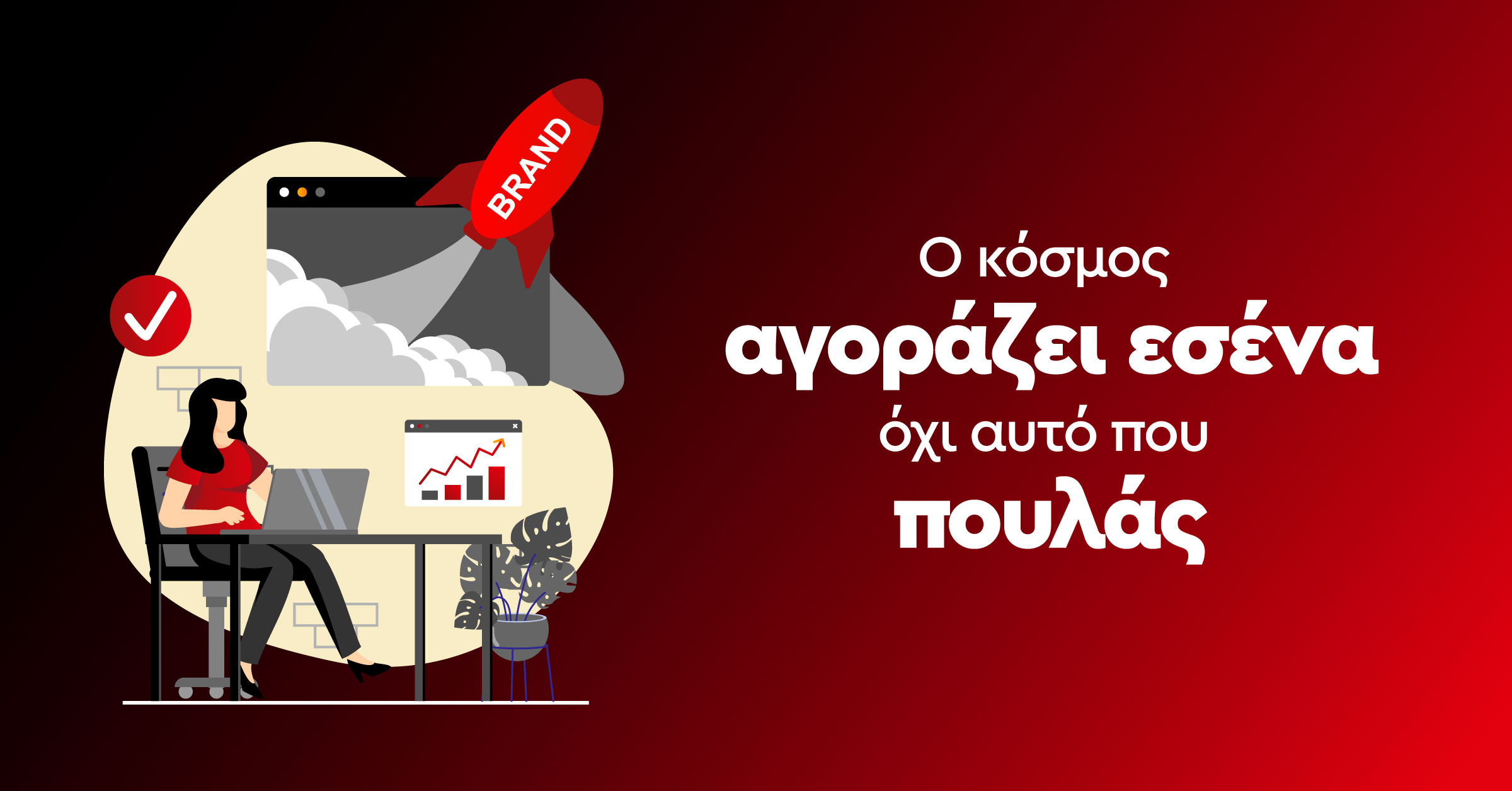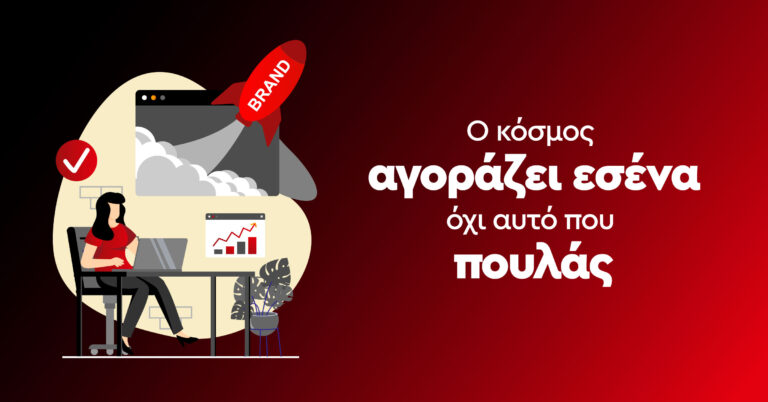
People Buy You, Not What You Sell
A common business owner’s phrase: I have the best XXXX. I use the best raw materials, perfect production processes, I carefully manage my suppliers, so why am I not getting the sales I “deserve” from the market?
How many times have you seen a business with a very good product struggle to sell, while another, with something seemingly simpler, enjoys steady demand and customers who keep coming back?
This happens because people do not buy only what you sell. They buy the feeling you create, the trust you inspire, and the way you make them feel before, during, and after the purchase.
Simply put, people buy you. The way you speak, your image, your consistency, the experience you offer, and the confidence you create in your customer that they are making the right choice.
Why Do Two Similar Businesses Achieve Different Results?
If we place two businesses side by side that sell almost identical products, operate in the same area, and offer similar prices, we will often see one growing while the other remains stagnant.
The difference is usually not only in the product. It lies in the way each business communicates its value.
One business may have:
- a clear brand identity
- a strong social media presence
- human-centered communication
- consistency in its image
- a customer experience that builds trust
The other may rely on:
- discounts and offers
- prices
- generic product descriptions
- a fragmented presence
- communication without a clear personality
In the first case, the customer sees a business with character. In the second, they simply see another seller.
People Buy Emotion Before They Buy a Product
A purchasing decision is never purely rational. Even when customers believe they are choosing based on price, quality, or technical specifications, they are actually influenced by how they feel about the business.
If they feel safe, they are more likely to buy. If they feel understood, they are more likely to trust you. If they feel that there are people behind the business who demonstrate consistency, experience, and genuine care, then the choice becomes easier.
That is why we often see customers choosing more expensive solutions—not because they cannot find cheaper alternatives, but because they feel more confident.
This is branding in practice. It is not just a logo, colors, or design. It is the overall feeling a business leaves with its customers.
Trust Is the Real Competitive Advantage
“The customer who opens their heart to you will eventually open their wallet too.”
In a market full of choices, trust is perhaps the strongest competitive advantage.
Today, customers see every day:
- advertisements
- special offers
- posts
- stories
- newsletters
- sponsored content
Everyone is trying to capture their attention. But attention alone is not enough to generate a sale.
For someone to buy, they need to feel they can trust you. They need to believe that you can deliver what you promise.
That is why digital marketing is not simply about appearing in front of more people. It is about presenting yourself correctly to the right people.
The Biggest Mistake Many Businesses Make
Many businesses invest time and money explaining what they sell. They describe products, services, features, prices, and offers.
All of these are useful, but they are not enough.
What is often missing is the “why”.
- Why does this business exist?
- What makes it different?
- Who are the people behind it?
- What experience do they have?
- How do they treat their customers?
- What values guide their work?
When these things are not visible, a business loses the opportunity to create a connection. It becomes comparable only on price.
And when a business is compared only on price, sooner or later it enters a race that is very difficult to win.
What Does This Mean for a Small Business Today?
For a small or medium-sized business, building a brand is not a luxury. It is a necessity.
You do not need to be a large company to have a strong identity. You simply need to know who you are, who you serve, and how you want customers to feel when they interact with you.
Your website, your social media channels, photographs, content, advertisements, emails, and even the way you answer the phone all contribute to your image.
Every customer touchpoint either strengthens or weakens trust.
Everyday Examples
Think about a small neighborhood café. It may not have the best coffee in town, but it knows its customers by name, remembers their preferences, and creates a sense of familiarity.
People do not return only for the coffee. They return for the experience.
The same applies to a technician who answers the phone, provides clear updates, keeps promises, and never leaves customers uncertain.
They may not be the cheapest option, but they earn referrals. And referrals are the result of trust.
Likewise, a hotel may offer rooms similar to many others. What guests will remember is how they were welcomed, whether they felt cared for, and whether the promise they saw online matched reality.
Practical Steps to Build Trust
The first step is to stop talking only about products and start showing the people, philosophy, and process behind them.
Customers want to know who they are buying from.
To build trust, a business should focus on:
- Showing the people behind the company.
- Explaining its philosophy in a simple way.
- Maintaining consistency in its image.
- Communicating with a consistent tone of voice.
- Taking care of the customer experience.
- Sharing real examples of its work.
- Avoiding exaggeration and empty promises.
Advertising may create the first interaction. The experience is what creates the next one.
Conclusion
Most businesses believe they compete based on their products. In reality, they compete based on the trust they inspire.
Customers may forget a promotion, an advertisement, or a price. What they rarely forget is how a business made them feel.
That is why branding, corporate identity, digital marketing, and customer experience should not be treated as separate elements. Together, they build the image people have of your business.
And that image is ultimately what sells.
Not the product alone.
You.
One Final Question
If your products and services were removed from the equation today, would there still be something that would make a customer choose you again?
If the answer is not clear, perhaps you do not simply need more advertising.
Perhaps you need a better way to show people who you really are.